
Hotel Legacy: Merge Game
Century Games Innovation Pte. Ltd.Casual
4.7671.00 Reviews
- Version
- 19.0.0
- Installs
- 1.00M
- Age Rating
- Everyone
Screenshots
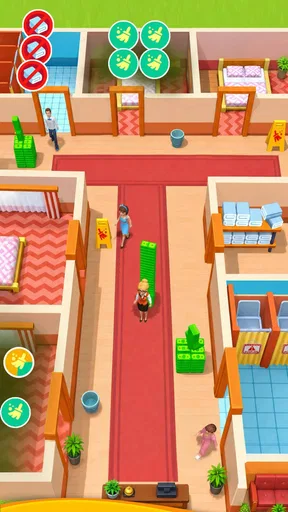
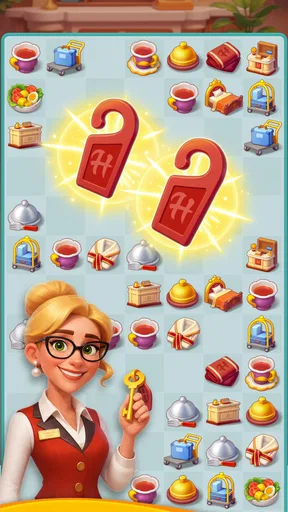
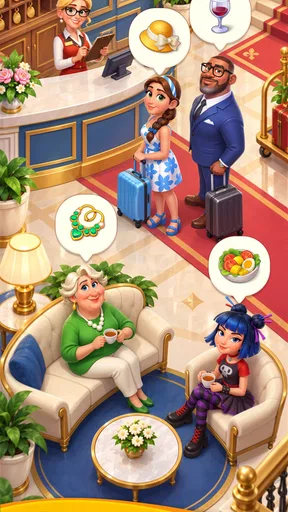
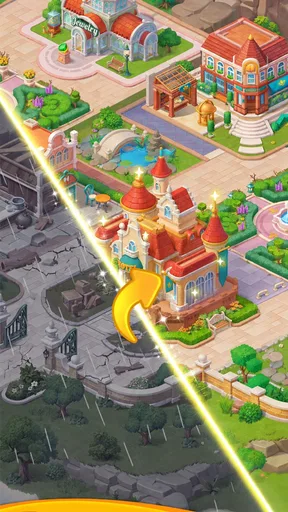
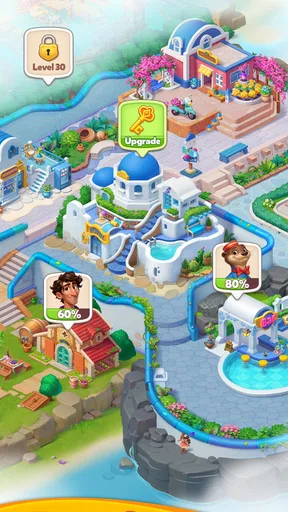

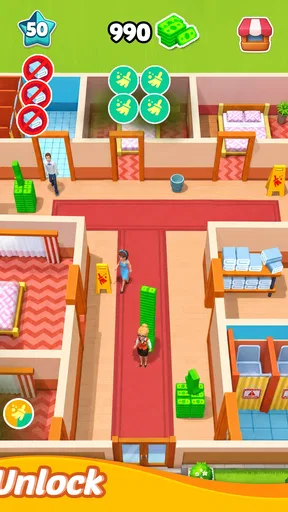
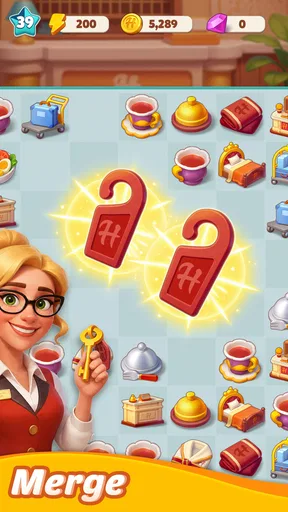
Our Review of Hotel Legacy: Merge Game
 Analysis by Appyee
I approached Hotel Legacy: Merge Game expecting a relaxed casual title built around combining objects and improving a hotel. That first impression is accurate, but it does not capture the more important question: how comfortable is the game when progress, patience, and spending begin to overlap? After spending time with it, I found a pleasant renovation-focused experience that is easy to understand, visually inviting, and best suited to players who enjoy gradual improvement rather than constant action.
The basic appeal is straightforward. You work through hotel-related tasks, combine matching items, and use the results to move renovation work forward. The loop is simple enough for short sessions, yet it gives each small action a visible purpose. Instead of clearing a board with no lasting consequence, I felt that my decisions were contributing to a larger property. That sense of continuity is what gives this casual game more staying power than a completely disposable matching puzzle.
It is free to download and carries an Everyone age rating, which makes it approachable for a broad audience. Century Games Innovation Pte. Ltd. is the developer, and the game has reached over a million installs with a 4.5 average from around ten thousand ratings. Those figures suggest that the concept has found a substantial audience, although popularity alone does not tell me whether its progression will suit every player.
How the hotel loop feels in everyday play
The strongest part of the experience is the relationship between the merge board and the hotel itself. Combining items is satisfying because it is not presented as an isolated activity. The outcome feeds into a visible renovation journey, so I always had a reason to care about the next useful combination. This structure works especially well when I only have a few minutes available and want something more purposeful than an endless score chase.
A realistic use case is a short break during a commute or while waiting for an appointment. I can open the game, complete a few available actions, make a couple of combinations, and leave without needing to remember a complicated control scheme. The casual format makes it easy to return later. It is not the sort of game I would choose when I want a deep strategy session, but it fits neatly into fragmented time.
The hotel theme also gives the progression a warmer personality than a plain merge grid. Renovation provides context for the rewards, and that context can make routine tasks feel more meaningful. I enjoyed having a clear visual destination for my work. The trade-off is that players who prefer direct puzzle mechanics may find the decorative and renovation layer slower than a focused match-three or pure merge game.
One useful habit is to pause before combining everything immediately. In a game built around merging, the most obvious move is not always the most useful one. I found it better to look at the available tasks first, then decide whether a combination helps the current objective or merely creates a larger item without immediate value. That small change in approach makes the board feel less like a reaction test and more like light resource planning.
Another practical tip is to treat the board as a workspace rather than a place to empty as quickly as possible. Keeping a little room available can matter more than chasing one impressive merge. When the board becomes crowded, every new item feels like a problem, and the relaxed tone disappears. I had a smoother experience when I preserved open spaces and resisted the urge to combine simply because two matching pieces were visible.
Progress is inviting, but patience is part of the design
Renovation games depend on delayed rewards, and this one is no exception. The satisfaction comes from seeing a property improve over time, not from finishing everything in one sitting. That pacing is comfortable for players who like a gentle routine, but it can feel restrictive if you want rapid access to every new stage or task.
The important distinction is between a game that asks for patience and one that makes patience feel pointless. Here, the hotel theme gives waiting and gradual work a clear narrative reason. Even so, anyone who dislikes energy limits, timers, repeated collection, or similar forms of friction should approach carefully. The game’s appeal depends on accepting a measured rhythm rather than expecting uninterrupted progress.
I also recommend deciding in advance what kind of session you want. If I opened it casually and expected to renovate continuously, any interruption in the loop felt more noticeable. If I treated it as a small daily activity, the same pacing felt much more natural. That is a meaningful trade-off: the game can be relaxing when played on its own terms, but less enjoyable when pushed into a long-session format.
Spending deserves a clear, restrained discussion. The game is free, while its in-app purchase range runs from $0.99 to $99.99 per item. That range tells me that optional purchases exist at very different levels, but it does not by itself prove how often the game presents them, how much progress they provide, or whether they are necessary. I would not assume that paying is required, and I would not assume that every player will find the purchase design comfortable either.
My practical advice is to play long enough to understand the normal rhythm before buying anything. First learn how quickly ordinary progress arrives, how often the board gives you meaningful choices, and whether the renovation loop remains enjoyable when you are not accelerating it. This is a better way to judge value than purchasing early because a task feels slow. If the basic loop already feels repetitive, spending more will not solve that underlying issue.
Does spending affect competitive fairness?
Fairness is easier to judge in a game with direct competition, rankings, or player-versus-player matches. Hotel Legacy is primarily a personal renovation and merge experience, so my main concern is not whether another player can defeat me. It is whether spending changes my own pace so dramatically that the ordinary game starts to feel like an obstacle.
I found the most useful fairness question to be personal rather than competitive: can I enjoy the hotel’s progress without feeling pushed into a purchase? The answer will depend on how comfortable each player is with waiting and repeating tasks. A patient player may see purchases as optional convenience, while someone focused on rapid completion may experience the same design as pressure.
That distinction matters because not every advantage is competitive. Faster progress in a private renovation game does not automatically create an unfair contest. It can still affect enjoyment, though, especially if the free path feels deliberately less satisfying beside the paid path. Since the available purchase information only establishes the price range, I prefer not to claim more than that. The sensible approach is to regard spending as a choice that should be made after understanding the free experience.
For families, the Everyone rating is reassuring as a broad content signal, but it does not replace household spending controls. A child may understand the merge mechanics without understanding the real-world meaning of an in-app purchase. I would use the device’s purchase protections and make the payment rules clear before handing the game to a younger player. That is not a criticism unique to this title; it is simply good practice whenever a free game includes optional purchases.
What I would still check before committing
There are a few points I would leave open rather than pretend to know. The current version is 14.0.0, and the listed minimum operating system is Android 7.0. Those details make the game accessible to many older Android devices, but compatibility in practice can still depend on the particular phone or tablet. I would check the store page on the device I plan to use before downloading, especially if it is older or has limited storage.
I would also pay attention to how the game feels after the initial novelty fades. Merge systems can be charming at first because every combination feels like discovery. Later, the experience depends on whether the tasks remain varied enough to justify returning. The hotel framework gives the loop a stronger identity, but it cannot remove the basic repetition inherent in merging. Players who need constant mechanical change may eventually prefer a more action-oriented casual game.
Another unknown worth handling honestly is the precise balance between free progress and paid acceleration. The listed purchase range confirms that optional items can cost from less than a dollar to nearly a hundred dollars, but it does not explain the role of each item. I would therefore avoid judging the entire economy from the highest possible price alone. At the same time, I would treat that upper end as a reason to be deliberate, not impulsive, about purchases.
The game is also not the ideal choice for someone seeking a competitive test of skill. There is no reason to approach a hotel renovation merge title expecting the strategic depth of a board game, the reflex demands of an arcade game, or the social tension of a head-to-head match. Its strengths are routine, presentation, and gradual ownership of a changing space. If those are not appealing, a different casual category will probably be a better fit.
Who will enjoy it most
I would recommend it to players who like tidy visual progress, light planning, and games that can be enjoyed in short visits. It is particularly suitable for someone who wants a calming activity with a recognizable long-term goal. The hotel setting also makes it easier to stay engaged than a merge game that offers combinations without a broader reason for making them.
It may also work well for players who enjoy optimizing small decisions. Watching the board, preserving space, and choosing which merge supports the current renovation task can add a modest strategic layer. This is not demanding strategy, but it is enough to reward attention. I found that the best sessions came from thinking one or two moves ahead rather than tapping every available match immediately.
I would skip it if I strongly dislike waiting, repeated collection, or monetized free-to-play progression. I would also look elsewhere if my priority is a story-heavy hotel simulation, detailed interior design, or a complex management system. The renovation theme is the frame for the merge loop, not a replacement for a full simulation. That difference is important because the store summary may sound broader than the moment-to-moment activity actually feels.
Compared with a standard match-three game, this title offers a more persistent sense of place and a slower form of progress. Compared with a pure merge game, the hotel gives combinations a clearer purpose. Compared with a management simulator, it is much lighter and more accessible, with less emphasis on detailed planning. In my view, it sits comfortably between those alternatives, but it does not fully replace any of them.
My trust verdict after weighing the trade-offs
My overall impression is positive but measured. Hotel Legacy: Merge Game understands why the merge-and-renovate formula works: simple actions become more satisfying when they visibly improve a place I can return to. The game is easy to pick up, suitable for casual sessions, and more personable than an abstract puzzle board.
Its main weakness is also built into that formula. Progress is intentionally gradual, and the presence of in-app purchases means I would pay attention to how comfortable the free pace feels before spending. The purchase range from $0.99 to $99.99 per item is broad enough that I would never recommend buying automatically or treating the game as entirely friction-free. I would play first, set a personal spending limit, and only pay for something if it clearly improves my enjoyment rather than relieving impatience.
The developer, Century Games Innovation Pte. Ltd., has a casual game with a clear identity and a sizeable audience. The 4.5 average and over a million installs make it easy to see why people are trying it, but my recommendation is based more on the actual fit: this is for players who enjoy gradual renovation, light board planning, and a relaxed return-and-progress routine.
My final recommendation is to try it as a free, short-session game and judge the pacing before investing money. If the pleasure of improving the hotel keeps you interested even when progress slows, the game can become a satisfying everyday companion. If you need constant action, transparent rapid advancement, or a genuinely competitive experience, I would choose another casual title instead. For the right player, though, its quiet merge loop and visible renovation goals make it an easy game to revisit.
Privacy and Permissions
See what permissions an app requests and how it handles your data.
- Wi-Fi connection information
- view Wi-Fi connections
- Other
- view network connections, change network connectivity, full network access, change your audio settings, control vibration, prevent device from sleeping, Google Play license check
Verdict
Strengths of Hotel Legacy: Merge Game
- Relaxing merge gameplay that is easy to learn and play casually.
- Hotel renovation gives progress a clear and rewarding purpose.
- Short tasks make it convenient for quick sessions on mobile.
- Colorful visuals and charming locations create a pleasant atmosphere.
- Regular rewards help maintain momentum without requiring constant play.
Limitations of Hotel Legacy: Merge Game
- Energy limits can interrupt progress during longer play sessions.
- Some upgrades may require repeated merging and feel time-consuming.
- Later areas can make resource management more demanding.
- Optional purchases may appeal to players seeking faster progress.
- The story may feel fairly simple for players wanting deeper characters.
Other Releases by Century Games Innovation Pte. Ltd.
View All


Similar Picks in This Category
View All
My Talking Angela
Outfit7 Limited4.2

My Talking Tom
Outfit7 Limited4.3

Pou
Zakeh4.2

My Talking Tom 2: Pet Game
Outfit7 Limited4.3

Candy Crush Saga
King4.6

Bridge Race
Supersonic Studios LTD4.1
Frequently Asked Questions
What is Hotel Legacy: Merge Game about?
Hotel Legacy: Merge Game is a casual renovation and management game built around merging items. You restore and improve a hotel by combining matching objects, completing tasks, unlocking new areas, and helping characters with their stories. The gameplay is easy to understand, but later levels introduce more demanding objectives that require planning your board space and resources carefully.
How does the merging system work in Hotel Legacy: Merge Game?
The main mechanic is to merge three or more identical items to create a more advanced object. These items are used to complete renovation orders, produce useful materials, and progress through the hotel. Since the board can fill quickly, it is important to avoid making unnecessary merges and to think ahead about which chains and objectives you need to prioritize.
Can Hotel Legacy: Merge Game be played offline?
Some basic gameplay may remain available without a constant internet connection, but certain features can require online access. Events, advertisements, cloud synchronization, updates, purchases, and other connected services may not work correctly offline. For the most complete experience, including access to current content and account-related progress, an internet connection is generally recommended.
Is Hotel Legacy: Merge Game free to download and play?
Hotel Legacy: Merge Game can typically be downloaded and played for free, but it may include optional in-app purchases. These purchases can provide energy, boosters, currency, or other helpful resources that speed up progress. You can enjoy the main experience without paying, although waiting for energy regeneration and managing limited resources becomes more important as the game advances.
Is Hotel Legacy: Merge Game suitable for children?
The game uses simple controls, colorful visuals, and non-violent renovation-focused gameplay, making it accessible to a broad audience. However, parents should review the age rating and the app’s store information because advertising, in-app purchases, and online features may be included. If children play, enabling purchase restrictions is a sensible way to prevent accidental spending.
Play our best games!


